
PhD Candidate, Monash University
10 May 2026
What does it mean to live on a frontline where the Cold War was heard as much as it was seen? From the early 1950s, the Taiwan Strait became a frontline of psychological confrontation, where sound emerged as a powerful medium of cross-strait communication, persuasion, and control. For nearly four decades, broadcasting campaigns between Xiamen and Kinmen produced a sustained sonic confrontation across only a few kilometres of water. These were not isolated propaganda efforts, but part of a structured and reciprocal system of psychological warfare within the broader militarisation of the Cold War frontier.
This article argues that psychological warfare in Kinmen worked not only through ideology, but through sound itself. Broadcasts shaped attention, emotion, and everyday life, turning the frontier into an acoustic battleground. Loudspeakers did not simply transmit; they created a persistent soundscape that blurred the boundaries between warfare, communication, and daily life. Building on Dayton Lekner’s analysis of cross-strait loudspeaker propaganda as “heart war calling” (心戰喊話) and as a process of sonic diffusion, this article shifts attention to Kinmen as a lived frontline soundscape (Lekner 2023). It asks how psychological warfare was heard, endured, remembered, and folded into everyday life on the island.

Figure 1. Mashan Broadcasting Station. The slogan “還我河山” (“Recover our rivers and mountains”) reflects a core Nationalist motif, invoking the loss of the Chinese mainland and the mission to reclaim it. The logo of the psychological warfare unit is visible in the lower left. Photograph by author, April 2025.
Displayed today at the Mashan 馬山 is a text titled “Message to Compatriots on the Mainland” (“對大陸同胞喊話文”). It begins with a direct and striking appeal:
“My dear compatriots on the mainland, brothers and officers of the Communist forces stationed at Jiaoyu, Xiaodeng, and Dadeng. This is your best opportunity to break free from Communist rule and seek freedom. If you are discovered before reaching Kinmen, we stand ready to cover you with artillery fire or smoke at any time.” (Mashan Broadcasting Station 2025)
This message captures the tone of Cold War confrontation across the Taiwan Strait at its most immediate: intimate, urgent, and political. It speaks not only to enemies, but to “brothers,” combining threat with reassurance and ideology with emotion. The language is coercive, but also personal, revealing how these broadcasts relied on familiarity as much as antagonism.
Psychological Warfare as a Sonic System
From the early 1950s, both the Republic of China and the People’s Republic of China developed coordinated systems of what military planners described as the five elements of psychological warfare: artillery bombardment, loudspeaker broadcast, leaflets, aerial drops, and sea-drift propaganda. These methods worked together as an integrated communication strategy, in which sound, print, and material objects reinforced one another across the strait. Kinmen’s broadcasting infrastructure formed a central node within this system. At Mashan, one of the closest points to mainland China, large broadcasting walls were constructed facing seaward, projecting sound toward coastal Fujian (Mashan Broadcasting Station 2025).
The Beishan Broadcasting Wall was fitted with 48 loudspeakers capable of transmitting messages over distances exceeding 20 kilometres. This sonic confrontation was reciprocal. In 1953, mainland forces established a broadcasting group on Jiaoyu Island in Xiamen, and the ROC military followed with multiple broadcasting stations in Kinmen from 1954 onward (Mashan Broadcasting Station 2025). As Yang Min notes, stations were often built in direct response to the opposing side, creating a “counter-performance” (對台戲 dui tai xi) in which each installation was quickly answered by another (Min 2010).
Over time, Kinmen and Xiamen developed mirrored broadcasting infrastructures, transforming the strait into what former personnel and observers later described as a “war of sound.” Broadcasting stations were constructed alongside tunnels, fortifications, and command systems, underscoring how psychological warfare was treated as an integral component of defence strategy rather than a secondary propaganda activity (Tseng & Chen 2014).
Crucially, this “war of sound” worked not only through the content of messages but through repetition and volume. Broadcasts were often transmitted around the clock, creating an auditory environment that blurred political communication into noise (Chow 2018). What mattered was not simply whether listeners believed the message, but whether they could escape it. This reflects Jacques Ellul’s argument that effective propaganda depends on continuity and duration: it must leave no gaps, occupy “the citizen’s whole day and all his days,” and limit moments of distance or reflection (Ellul 1973). Late-night transmission made these broadcasts especially difficult to ignore, particularly for soldiers on duty, and the stations continued operating even during artillery bombardments (Yang 2010).
Voices of Persuasion
Behind these broadcasts lay a tightly organised institutional structure. Broadcasting stations were embedded within the ROC military’s political warfare system and staffed by announcers, technical personnel, intelligence officers, and support staff. Their work was considered highly sensitive, and their lives were strictly regulated: movement required permission, visits were controlled, and personnel were regularly rotated. Within this system, female announcers played a prominent role. Recruited both internally and externally, they followed military discipline while serving as the primary voices of broadcast communication (Mashan Broadcasting Station 2025).
The prominence of female voices reflected the affective logic underpinning psychological warfare. Rather than relying only on aggressive political rhetoric, broadcasts often adopted intimate and familiar tones designed to reduce distance across ideological divides. Messages addressed listeners as “compatriots” and “brothers,” invoking kinship and emotional familiarity across the strait. Voice itself became a strategic instrument of persuasion. As Isabelle Cheng argues, women’s voices were mobilised as political resources within this acoustic confrontation. Speaking on behalf of the state, female broadcasts gave psychological warfare a human and intimate form, while helping to construct a cross-strait soundscape shaped by ideological rivalry, military confrontation, and emotional appeal (Cheng 2021).

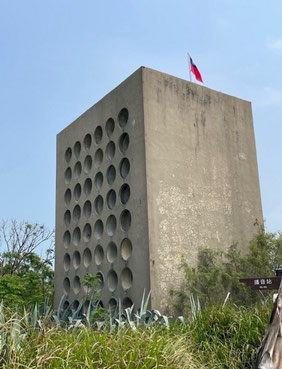
Figure 2. Left: Female announcer at the Mashan Broadcasting Station, shown in a photograph exhibited at Hujingtou 湖井頭on Lieyu Island. Right: The ten-metre-high Beishan Broadcast Wall, constructed in 1967 and fitted with large loudspeakers used to transmit anti-communist broadcasts toward mainland China, until the late 1970s. Photographs by author, April 2025.
Beyond ideological messaging, broadcasts also deployed affective strategies aimed at personal identification and emotional response. Scripts included assurances of safety and material reward for defection, as well as personalised messaging directed at specific individuals or groups. These appeals were often formalised in guarantees such as the “five guarantees” (五條保證 wu tiao baozheng), which pledged protection from punishment, personal safety, assistance with return or resettlement, and access to employment. Financial incentives could also include cash rewards, gold, or bonuses for bringing weapons across to Kinmen (Yang 2010).
On the mainland side, similar strategies were framed in explicitly affective and familial terms. The PLA Fujian Frontline Radio Station, for example, presented its broadcasts as expressions of shared kinship, seeking to convey the “profound bonds of kinship” (骨肉情深 gurou qing shen) between mainland and Taiwanese compatriots (Xinhua 2008). Despite their opposing political systems, both sides relied heavily on the language of family, home, and emotional attachment. This shared vocabulary shows how psychological warfare across the Taiwan Strait was not only ideological but also rooted in the social and emotional ruptures produced by civil war, displacement, and separation.
Listening from the Frontline

Figure 3. Megaphone-shaped installation facing the Chinese mainland from Kinmen, recalling the island’s history of cross-strait propaganda and psychological warfare. Photograph by author, April 2025.
The reception of these broadcasts varied significantly across different audiences. Mainland soldiers were officially restricted from listening, but the messages still circulated and shaped perceptions:
“Things drifted over from Kinmen – phrases like ‘Communist brothers,’ ‘Chiang Kai-shek’s army,’ or promise of gold. At that time, listening was strictly forbidden; thought control was severe. I really believed Taiwanese people were living in dire conditions, eating banana peels, and that we were going to liberate them!” (Mashan Broadcasting Station 2025)
For Kinmen residents, the broadcasts formed part of an intrusive and often unwelcome soundscape, particularly when transmitted late at night at high volume:
“It was only clearer when the wind was right. The songs they played were mostly rousing or revolutionary, not very pleasant to listen to. On the contrary, their intelligence work was quite good. We often only know which army unit had moved to Kinmen, or which commander had changed, by listening to their broadcasts. It was still very bothersome, especially late at night, or during the day when we had to endure this noise while working or attending school – it only made us resentful.” (Mashan Broadcasting Station 2025)
Among Nationalist soldiers, the broadcasts operated through a personal register shaped by separation and longing. Many had family across the strait, and mainland broadcasts often invoked these ties during festivals:
“They knew most of us had come to Taiwan from the mainland. Our families were all over there. During festivals, they would have family members call out to us from the other side: ‘Son! When we gather for New Year’s Eve dinner, I always set out an empty bowl and a pair of chopsticks for you, waiting for your return.’ Homesick? Of course, I missed home…” (Mashan Broadcasting Station 2025)
At the level of everyday practice, these broadcasts were embedded in highly constrained frontline environments. Announcers operated under austere and militarised conditions, while broadcasting sites remained exposed to artillery fire. Psychological warfare was therefore not separate from military danger, but part of it (Yang 2010). Taken together, these accounts support Lekner’s argument that cross-strait loudspeaker propaganda produced “plural modes of hearing.” State messages were not received in a single, predictable way; they were ignored, misheard, feared, resented, remembered, or folded into everyday routines (Lekner 2023).
Teresa Teng and Soft Power
“By day, listen to Old Deng [Xiaoping],
and by night listen to Little Teng [Teresa Teng].”
(quoted in Li 2009)
By the later Cold War period, these strategies shifted toward softer and more culturally mediated forms of persuasion. The involvement of Taiwanese singer Teresa Teng (鄧麗君) exemplifies this shift. Her broadcasts introduced a sense of familiarity and intimacy that contrasted sharply with the harsher tone of earlier propaganda campaigns. Yet Teresa Teng was only the most famous example within a broader history of women whose voices were used in radio and loudspeaker propaganda. As Cheng notes, many military and civilian female announcers remain far less visible, despite their central role in sustaining this cross-strait soundscape (Cheng 2021).
Songs such as The Moon Represents My Heart (月亮代表我的心) and Sweet Honey (甜蜜蜜) were reportedly broadcast to mainland audiences through programmes such as “Voice of Free China,” reflecting a broader transition from overt ideological messaging toward more affective and culturally mediated influence (China News 2010). This shift did not mean that political objectives disappeared. Rather, politics became embedded within popular culture itself. Music offered a different mode of influence: less confrontational, more intimate, and potentially more persuasive because it appeared less overtly political. As Jowett and O’Donnell note in Propaganda and Persuasion, music can function as a propaganda technique precisely because it joins sound, language, repetition, emotional association, and familiarity (Jowett & O’Donnell 2012).
The case of PRC pilot Wu Ronggen (吳榮根) illustrates this overlap between music, celebrity, and defection propaganda. Wu defected to Taiwan via South Korea in 1982 and was later publicly associated with Teresa Teng. He met and sang with her at Ching Chuan Kang Air Base (清泉崗空軍基地) near Taichung, and the encounter was repackaged in ROC propaganda material directed towards the mainland (Morris 2022). It is also reported that Wu had frequently listened to the Central Broadcasting System and was especially fond of its Teresa Teng programme (Li 2009). His case suggests that popular music did not replace political messaging but could intensify it by making the imagined world of “Free China” feel more intimate and desirable.

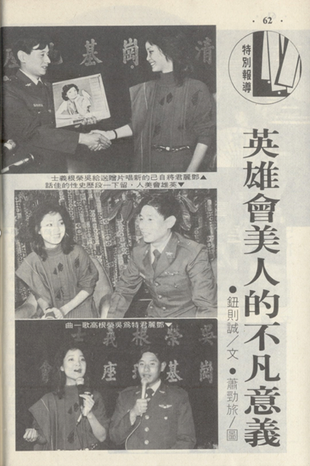

Figure 4. TV Weekly coverage of PRC pilot Wu Ronggen’s 1982 meeting with Teresa Teng at Ching Chuan Kang Air Base. Source: TTV Weekly, no. 1052, 5 December 1982, 62–65; reproduced via teresa.jpn.org.
During a visit to Kinmen in 1991, Teresa Teng addressed listeners across the strait in language that combined democracy, freedom, and emotional closeness:
“My dear compatriots on the mainland, hello – this is Teresa Teng. I am speaking to you from the Kinmen broadcasting station, on the very front line of our free homeland. I feel both joyful and deeply moved to be here. I hope that our compatriots on the mainland may one day enjoy the same democracy and freedom that we do. Only within a free and democratic society can individuals realise their dreams, and only when young people are able to fully use their talents can the future be filled with hope. I look forward to returning to Kinmen soon – and to speaking again with you across the coast. I wish you all good health. Long live democracy. Thank you.” (Mashan Broadcasting Station 2025)
Her voice, already widely recognised and emotionally resonant across the Chinese-speaking world, carried a different kind of authority grounded in familiarity rather than military command. Her popularity among mainland listeners was considered valuable enough for her contribution to receive recognition from the ROC military’s political warfare system (China News 2010). Significantly, infrastructure originally designed for military announcements and political messaging increasingly transmitted popular music, revealing a broader transformation in psychological warfare itself. This shift also anticipated the later orientation of Taiwan’s external broadcasting from Cold War propaganda toward public diplomacy (Rockower 2010).


Figure 5. Screenshots from Teresa Teng’s 1991 visit to Kinmen’s Mashan Broadcasting Station. Screenshots from CCTV4 footage accessed via YouTube.
Hearing the Cold War from Kinmen
Over time, both sides adapted their tone, timing, and messaging, producing forms of familiarity and tacit coexistence despite continued confrontation. What appeared geopolitically as rigid hostility was, in practice, shaped by repetition, familiarity, and forms of coexistence across the strait. Psychological warfare in Kinmen therefore functioned not only as an instrument of conflict, but also as a constrained form of communication structured by both opposition and interdependence.
This war of sound unfolded within the rhythms of everyday life. It entered homes, classrooms, fields, and coastal villages, becoming part of the sensory and social environment through which people experienced the Cold War frontier. Kinmen’s loudspeaker warfare shows that Cold War conflict was not experienced only through bombs, military standoffs, or diplomacy. It was also heard.
References
Cheng, Isabelle. 2021. “Speaking on Behalf of the State: The Women on the Radio and Behind the Loudspeakers During the Cold War.” Taiwan Insight, May 18, 2021. https://taiwaninsight.org/2021/05/18/speaking-on-behalf-of-the-state-the-women-on-the-radio-and-behind-the-loudspeakers-during-the-cold-war/ (accessed May 2, 2026).
China News. 2010. “邓丽君为何获得台军 ‘政战部’颁发的功绩奖状” [Why did Teresa Teng Receive a Merit Award from the ROC Military’s Political Warfare Department?]. Adapted from 老照片 [Old Photos]. Shandong Pictorial Publishing House. https://web.archive.org/web/20100619231510/http://www.chinanews.com.cn/tw/news/2010/05-14/2283181.shtml (accessed May 2, 2026).
Chow, Vivienne. 2018. “Beishan Broadcast Wall: Taiwan’s Eerie Sonic Weapon.” BBC, September 25, 2018. https://www.bbc.com/culture/article/20180924-beishan-broadcast-wall-taiwans-eerie-sonic-weapon (accessed May 1, 2026).
Ellul, Jacques. 1973. Propaganda: The Formation of Men’s Attitudes. Translated by Konrad Kellen and Jean Lerner. New York: Vintage Books.
Jowett, Garth S., and Victoria O’Donnell. 2012. Propaganda and Persuasion. 5th ed. Thousand Oaks, CA: SAGE.
Lekner, Dayton. 2023. “States of Diffusion: Ideology, Text, Voice, and Sound in Cold War Chinas.” Modern China 49 (2): 159-191.
Li, Laura. 2009. “The Central Broadcasting System at 80.” Taiwan Panorama, January 2009. Translated by Scott Gregory. https://www.taiwan-panorama.com/en/Articles/Details?Guid=5d1ea
47a-0ba7-42d2-a8d5-28699048393a&CatId=7&postname=The%20Central%20Broadcasting%20
System%20at%2080 (accessed April 30, 2026).
Mashan Broadcasting Station (馬山播音站). 2025. Exhibition materials. Kinmen. Observed by author, April 2025.
Morris, Andrew D. 2022. Defectors from the PRC to Taiwan, 1960-1989: The Anti-Communist Righteous Warriors. London and New York: Routledge.
“鄧麗君1991年在金門向大陸同胞喊話” [Teresa Teng Addressing Mainland Compatriots from Kinmen in 1991]. 2013. YouTube video, September 14, 2013. https://www.youtube.com/watch?v=riHcC7LWIbQ (accessed April 30, 2026).
Rockower, Paul. 2010. “Radio Taiwan International: The Voice of Taiwan.” USC Center on Public Diplomacy, October 20, 2010. https://uscpublicdiplomacy.org/blog/radio-taiwan-international-voice-taiwan (accessed May 2, 2026).
Tseng, Y. J. & Chen, S. Y. 2014. “Conservation and Development of Military Sites on Kinmen Island.” WIT Transactions on the Built Environment 143 (January): 307-319.
Xinhua News Agency (新华网). 2008. “1981年2月14日解放军福建前线广播电台对台广播宣传工作” [14 February 1981 PLA Fujian Frontline Radio Station’s Broadcasting Work Toward Taiwan]. 新华网 (Xinhua News), September 27, 2008. https://web.archive.org/web/20160304194735/http://www.fj.xinhuanet.com/news/2008-09/27/content_17603035.htm (accessed May 1, 2026).
Yang, Min 杨敏. 2010. “台海大喇叭 ‘对话’ 38年:无烟斗中亦有默契” [Taiwan Strait Loudspeakers ‘Dialogue’ for 38 Years: Tacit Understanding Amid a Smokeless War]. 中国新闻网 (China News), August 12, 2010. http://www.chinanews.com.cn/tw/2010/08-12/2463236.shtml (accessed May 1, 2026).