
Kinmen’s Cold War is today highly visible in the island’s built and commemorative landscape. The Guningtou Battle Museum, the 823 Artillery Battle Museum, the Hujingtou Battle Museum, former tunnels, military sites, and slogans such as Chiang Kai-shek’s slogan 毋忘在莒 (Wu wang zai Ju), “Do not forget what happened at Ju,” all turn the island’s frontline past into recognisable public memory. The phrase refers to a story of retreat and recovery from the Warring States period, later recast on Kinmen as a slogan of anti-communist mobilisation and imagined return to the mainland. Denton reads it as a condensed symbol of Nationalist memory, combining nostalgia for the mainland with the Kuomintang’s earlier ambition to recover it (Denton 2021).

Figure 1: Chiang Kai-shek and officials visiting the 毋忘在莒 stone inscription on Taiwu Mountain, Kinmen. Written by Chiang in 1952 and carved into the mountain as a “spiritual fortress,” the inscription became a key symbol of the ROC mobilisation efforts. Source: Shilin Official Residence, Taipei City Government.
These museums, tunnels, slogans, and memorial spaces organise Kinmen’s Cold War around battles, dates, commanders, military infrastructure, and state narratives of endurance. They make the past visible and visitable. Yet they do not capture all the ways in which the Cold War was remembered by those who passed through, worked on, defended, or lived with the island’s militarisation. This article therefore turns to fragmentary forms of memory: an ironic expression about military posting, oral testimonies of fear and care work, stories surrounding the Sea Dragon Frogmen, and commemorations of military figures as protectors. By fragments, the article refers to memories that survive outside the main frame of official commemoration, including phrases, rumours, remembered fear, embodied military labour, and local forms of reverence. These fragments do not offer a complete history of Kinmen’s Cold War. They show how a frontline was experienced and later narrated from particular positions: by those assigned there, those who sheltered from shelling, those who cared for the wounded, those who patrolled its waters, and those who later encountered its past through memorial spaces.
This approach draws on oral scholarship because several of the sources discussed below are personal testimonies rather than military reports. Alessandro Portelli’s work is useful here because he argues oral sources are valuable not simply for reconstructing events, but for understanding how people give meaning to them (Portelli 1991). In the case of Kinmen, oral testimony helps shift attention from command decisions and battlefield chronology to the social experience of a militarised island.
Earlier articles in this series introduced Kinmen as a borderland, examined everyday life under militarisation, and traced the island’s Cold War fought through sound and psychological warfare. This article moves from those themes to several remembered fragments. The first reads the phrase “winning the Kinmen–Matsu lottery” alongside oral histories from the Veterans Affairs Council’s Veterans Culture Website. The second follows the Sea Dragon Frogmen, a real military unit, whose history has also been shaped by secrecy, danger, and stories of “water ghosts.” The third turns to General Hu Lien, who commanded Kinmen after 1949 and whose memory on the island has been institutionalised through images of command, construction, and protection. Together, these cases show how Kinmen’s Cold War survives not only as official history, but also through personal testimony, military legend, and local commemoration.
Winning the Kinmen–Matsu Lottery
In memories of compulsory military service in Taiwan, being sent to Kinmen or Matsu was sometimes described through the ironic phrase 抽中金馬獎 (chouzhong Jinma jiang), literally “winning the Kinmen–Matsu lottery.” A 2024 essay in Kinmen Daily News explains the phrase as a self-mocking expression used for conscripts who drew lots and were sent to the offshore islands. In the earlier decades of cross-strait confrontation, Kinmen and Matsu were far from Taiwan, harder to reach, and associated with uncertainty. To “win the Kinmen–Matsu lottery” therefore meant receiving a posting that could feel frightening before arrival, even if some veterans later remembered their time there with pride, humour, and attachment (Lai 2024). The phrase turns military posting into the language of chance. It captures how offshore islands could be imagined from Taiwan before departure: distant, dangerous, and uncertain.
Chen Yi-shen’s discussion of the 823 bombardment helps explain why such memories carried such weight. The artillery crisis began on 23 August 1958, but Kinmen’s military significance had already been debated for years. Chen notes that Chiang Kai-shek had considered withdrawing from Kinmen in 1950, when the ROC was consolidating Taiwan’s defence after retreating from other coastal islands. The plan was eventually abandoned after American military figures, including Douglas MacArthur and Admiral Charles Cooke, opposed giving up the island. By 1958, Kinmen had become much harder to treat as expendable. Chiang was closely reading the international situation before the bombardment, especially the Soviet and PRC calls for great-power talks and the question of Chinese representation in international politics. He suspected that a military offensive might be coming, perhaps “only Kinmen and Matsu” (Chen 2022).
This context helps explain why Kinmen’s later status as a symbol anti-communist resistance should not be treated as inevitable. It emerged through strategic calculation, external pressure, and changing assessment of what the offshore islands meant to Taiwan’s defence. The oral histories discussed below do not describe those calculations directly, but they show how the consequences of such decisions were experienced at ground level. The Veterans Affairs Council’s Veterans Culture Website is useful for this purpose as it preserves personal recollections of military service, work, and wartime experience. The three testimonies discussed here have been selected because they do not narrate the 823 bombardment from the perspective of command. Instead, they present three different positions within the frontline: a young woman assigned to morale and care work, a soldier who witnessed the opening moments of shelling, and a Women’s Corps member responsible for children during bombardment.
The first of these testimonies comes from Chang Chiu-hsiang (張秋香), whose memory begins with posting. Unlike male conscripts who might draw lots, Chang recalls being directly assigned to Kinmen after training. “As soon as I saw it was Kinmen, I started crying,” she remembered. Another woman cried too, even though she had been assigned to Yangmei in Taoyuan rather than Kinmen, because the offshore islands were imagined as frightening places. Chang herself remembered being “terribly afraid” and hearing rumours about “water ghosts” before she arrived. These rumours referred to frogmen associated with night-time coastal operations, a figure discussed further below. In Chang’s memory, Kinmen became frightening before she had even reached the island (Chang C. n.d.).
Her arrival on Kinmen on 4 August 1958 came only weeks before the 823 bombardment. Chang recalled that soldiers were busy building fortifications and that there was little room for the morale work she had expected to perform, such as teaching military songs. When the shelling began, she first thought the smoke and explosions looked “almost like a movie,” until her team leader shouted that Communist shells were coming. The next morning, she was sent to hospitals to comfort wounded soldiers. There, 慰問 (weiwen), an organised visit to comfort and encourage wounded soldiers, became practical care. It meant writing letters, buying things, taking temperatures, preparing plaster, and helping with nursing work. Through her testimony, Kinmen appears not only as a military position, but as a place where young women were drawn into the bodily and emotional labour of war (Chang C. n.d.).
A second account, by Chang Hsiao-yu (張效愚), gives a different view of the same bombardment. He was already inside the military system, newly promoted and stationed near the area between Zhushan and Kinmencheng. On 23 August, after his shift had just changed, he went down to eat. Then he heard incoming fire. The shells did not fall directly on his side of the mountain, but he saw heavy smoke rising near the Kinmen Defence Command. He remembered that the first wave of shells was the most dangerous because people did not yet know where they were coming from. He also recalled the saying that “old soldiers are not afraid of artillery; they are afraid of guns.” Chang Hsiao-yu further remembered that shells struck near the dining area used by senior officers, killing high-ranking members of the Kinmen Defence Command. Chiang Ching-kuo (蔣經國, Chiang Kai-shek’s son and later president of the ROC) and Hu Lien (胡璉), he recalled, had narrowly avoided being hit because they had recently returned from Little Kinmen or Lieyu and were resting elsewhere (Chang H. n.d.).

Figure 2: Li Li-hui in an oral-history interview. Source: Veterans Affairs Council, Veterans Culture Website.
The third perspective is offered by Li Li-hui’s (李麗輝), whose testimony shifts attention from soldiers to children. During the 823 bombardment, Li served in the Kinmen Women’s Corps and helped care for children at Lianhe Elementary School on Little Kinmen. At first, when she heard the artillery, she thought it was an exercise. Then came the order to take everyone to the air-raid shelter. Her memory centres on the suddenness of war and the fear of not knowing when it would end. Yet she also remembers herself through the role of a teacher. Even in the shelter, under the sound of explosions, she continued to encourage the children to be strong and brave (Li n.d.).
These testimonies form only a small selection from a wider archive of memories about service, displacement, labour, and life on the frontline. Read together, they serve as entry points into the more personal and uneven ways in which Kinmen’s Cold War past has been remembered.
The Sea Dragon Frogmen
The Sea Dragon Frogmen shift attention to Kinmen’s shoreline. In Cold War memory, the coast was not only a military boundary facing Fujian. It was also a space associated with night patrols, rumour, infiltration, and fear. Few figures capture this more vividly than the Sea Dragon Frogmen (海龍蛙兵, Hailong wabing), also known as “water ghosts” (水鬼, shuigui).
A 2025 article in Kinmen Daily News traces the unit’s origins to the aftermath of the Battle of Guningtou in 1949, when Chiang Kai-shek instructed General Hu Lien to establish a small reconnaissance team. After Guningtou, the waters between Kinmen and Fujian became a frontline zone where surveillance, infiltration, and counter-infiltration were central to defence. The unit later became associated with the Kinmen Amphibious Reconnaissance Battalion (金門兩棲偵察營), receiving training from American amphibious instructors and carrying out reconnaissance, raids, coastal surveillance, and other missions along the waters between Kinmen and Fujian (Li 2025). This institutional history anchors the “water ghost” in military practice. At the same time, the conditions of frogman work left room for rumour and legend. Their missions took place at night, in water, and near the opposite shore, making them difficult for civilians to observe directly. The gap between military secrecy and public imagination helped make them memorable not only as soldiers, but as figures associated with fear.
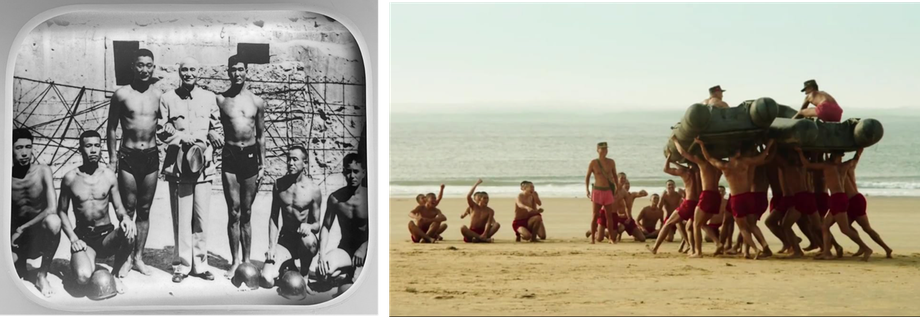
Figure 3: Left: Display photograph of the Sea Dragon Frogmen with Chiang Kai-shek at the Hujingtou Battle Museum, Kinmen. Right: Film still from Paradise in Service (2014), showing frogman training with rubber boats. Sources: left image photographed by author at the Hujingtou Battle Museum, April 2025; right image from IMDb, Paradise in Service (2014).
The overlap between military practice and legend appears clearly in accounts of classified Cold War missions. A 2026 UDN Time article notes that the Sea Dragon Frogmen carried out high-risk missions during the cross-strait confrontation, including infiltration, raids, sentry attacks, and intelligence gathering. It states that more than 130 classified missions were carried out. One example is the 1966 Shaoyang Plan (邵陽計畫), in which seven frogmen attacked Dadeng Island north of Kinmen; two were captured, four broke through, and Warrant Officer Wang Cheng-lu (王承魯) was killed, with his remains reportedly still on Dadeng Island (UDN Time 2026).
The “water ghost” image did not remain fixed in the Cold War. Later accounts show how the older figure of the shoreline raider carried into contemporary military culture. A military magazine article describes the Sea Dragon Frogmen as an elite amphibious reconnaissance force whose training includes long-distance swimming, rubber-boat operations, coastal landing, camouflage, rope descent, climbing, and simulated missions behind enemy lines. The emphasis falls on endurance and discipline, with long runs, open-water swimming, heavy packs, and team exercises used to test coordination as much as physical strength (Yang 2013). This source refers mainly to contemporary Sea Dragon Frogmen rather than the Cold War unit directly. It is therefore useful not as evidence for past operations, but for showing how the frogman is represented today as a military body shaped by discipline, exhaustion, and repeated movement between land and sea. Another article, focused on equipment, reinforces this contemporary image by presenting the Sea Dragon Frogmen as a modernised amphibious reconnaissance force equipped for different environments, including diving, sniper work, communications, jungle operations, and urban missions (Jin 2012).
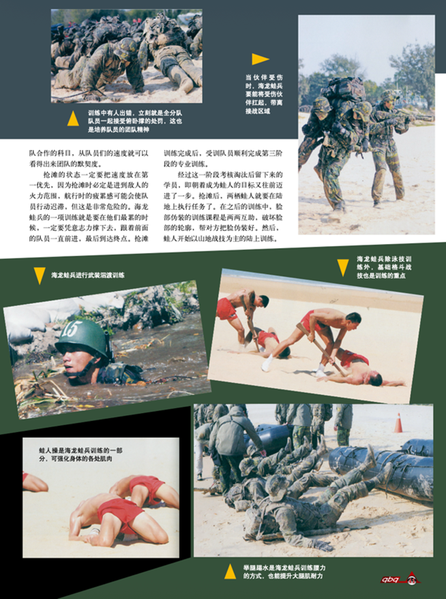
Figure 4: Training scenes of Taiwan’s Sea Dragon Frogmen, including crawling, armed swimming, physical conditioning, casualty-carrying, and rubber-boat exercises. Source: Yang 2013, 41.
Recent redeployment plans make the shift from Cold War shoreline to contemporary defence planning even clearer. In 2025, Defence Minister Wellington Koo confirmed that the Army’s 101st Amphibious Reconnaissance Battalion, better known as the Sea Dragon Frogmen, would be redeployed from Kinmen to Penghu. According to Taiwan News, Koo explained that although the battalion had been stationed in Kinmen, Matsu, and Penghu, its focus had previously been Kinmen and Matsu. With new barracks and updated training plans, most of the battalion would now be concentrated in Penghu. The stated aim was to strengthen combat capability and national defence resilience (Chen 2025).
During the Cold War, the frogman was closely tied to frontline islands and to the waters facing Fujian. The redeployment to Penghu suggests a shift from the older geography of offshore confrontation toward a wider defence logic centred on mobility, training, and Taiwan Strait contingency planning.
“Cunning as a Fox, Fierce as a Tiger”: General Hu Lien and Protective Memory
General Hu Lien (胡璉, 1907–1977) remains one of the most prominent military figures in Kinmen’s Cold War memory. He commanded Kinmen after 1949 and became associated with battlefield defence, roads, schools, water supply, economic management, and military-civilian relations. His memory shows how a commander could become a local protective figure through military authority and the organisation of everyday life under frontline conditions.
“十八軍胡璉,狡如狐、猛如虎,宜趨避之,以保實力,待機取勝” (“Hu Lien of the Eighteenth Army is cunning as a fox and fierce as a tiger; it is better to avoid him, preserve strength, and wait for the right moment to win”). The famous phrase, attributed to Mao Zedong, has often been used to describe Hu’s military reputation. In an account of Hu’s encounters with Communist commanders, Mao is said to have described Hu as “狡如狐, 猛如虎” (“cunning as a fox and fierce as a tiger”) and to have warned Liu Bocheng (劉伯承), a senior Communist military commander, and Su Yu (粟裕), one of the PLA’s leading field commanders, to treat Hu with caution (Hua 2016). The phrase shows how Hu’s reputation circulated beyond Kinmen itself. Even opponents remembered as a commander whose caution and force made him difficult to confront.
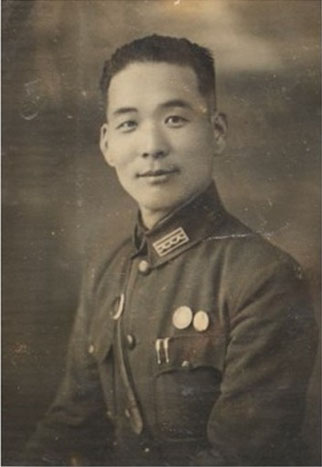
Figure 5: Portrait of General Hu Lien in 1936. Source: Hu Lien Culture and Arts Foundation n.d.
On Kinmen, however, Hu Lien is remembered in a wider register. The General Hu Lien Memorial Hall (胡璉將軍紀念館) presents him as a graduate of the Whampoa Military Academy, the Nationalist military academy in Guangzhou, who later took over defence of Kinmen in October 1949. The exhibition links him to both the Battle of Guningtou in 1949 and the August 23 Artillery Bombardment in 1958, but it does not present him only as a battlefield commander. It also stresses that Hu held civilian authority while commanding Kinmen, including leadership of the Fujian Provincial Government and the Kinmen War Zone Government Affairs Commission. In this presentation, Hu’s importance lies in the overlap between military command and civilian administration. He reorganised defensive forces, promoted economic development, reforestation, roads, bridges, schools, and public works, and became associated with the provision of daily necessities. The memorial hall records that residents called him “our commanding officer” and a “modern-day benevolent lord” (金門現代恩主公), placing him within a local vocabulary of protection rather than only military command (General Hu Lien Memorial Hall 2025).
Protection here refers to more than battlefield defence. It includes protection from scarcity and the pressures created by militarisation. After ROC troops moved to Kinmen in 1949, the island’s population increased sharply, while war and political separation cut Kinmen off from earlier exchanges with nearby coastal areas. Food, fuel, construction materials, and daily goods became urgent problems. Under these conditions, the military managed transport, supplies, prices, and movement, extending its control into Kinmen’s political, economic, and social life (Chang 2021). Hu’s long-lasting memory on Kinmen is tied to this situation. He is remembered as a commander who defended territory, and as an administrator who organised the material conditions that allowed soldiers and civilians to continue living on the island.
The memorial hall presents this work through the language of problem-solving and local development. It records that stabilising currency and securing goods were among Hu’s priorities after he took command. The Yuehua Servicemen’s Cooperative was established in November 1949 to purchase and transport goods to Kinmen, while ration coupons were issued to ease the difficulties faced by soldiers and civilians in buying supplies. The exhibition also describes Kinmen as short of water, roads, and trees, and presents Hu’s administration as addressing these problems through reforestation, reservoirs, roads, schools, and other construction projects. It also records smaller livelihood measures, including interest-free loans for farmers to raise pigs, the repair of salt fields, tile production for construction, and the establishment of facilities such as a vegetable-oil factory, ice factory, and power station (General Hu Lien Memorial Hall 2025).
This language of development should not be read too narrowly. Hu’s administration was concerned with making Kinmen more liveable, while also managing the social pressures created by a heavily militarised island. Soldiers and civilians lived close together, and the memorial hall itself notes that competition over food and water created tension. The phrase “the army to help the people and the people to respect the army” captures the ideal relationship Hu wanted to produce, but it also points to the tension that had to be managed (General Hu Lien Memorial Hall 2025).
Zeng’s article similarly places Hu Lien between defence and construction. Hu’s work after Guningtou moved quickly from battlefield command to the practical problems of holding an island under pressure. Water shortage, tree planting, road building, underground fortifications, Kaoliang liquor production, and the Yuehua Cooperative all formed part of the same wartime project. Kaoliang production, for example, was not simply an industrial story. It became a way to generate revenue, purchase supplies, encourage agricultural production, and sustain life on the island. Defence, supply, economic management, and morale-building were closely connected (Zeng 2018).
Hu’s memory therefore sits at the intersection of protection and control. Roads, reservoirs, schools, cooperatives, liquor production, ration coupons, and supply systems could be remembered as local development. At the same time, they were part of the infrastructure of militarisation. Chang Yu-Chia’s MA thesis is useful here because it shows that the movement of people and goods in Kinmen was not free but organised through systems of military control. Supplies did not simply circulate through the market. They were managed through official institutions that controlled quantity, price, and distribution, what Chang describes as the government’s “visible hand” in Kinmen’s economy. Hu’s legacy therefore sits at the intersection of protection and control. The same measures that made everyday life more stable also tied that life more closely to military rule (Chang 2021).
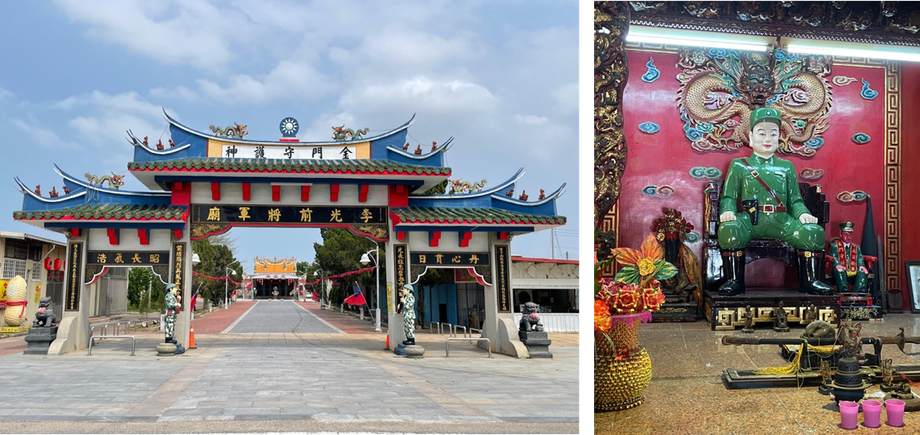
Figure 6: General Li Guang-Qian Temple (李光前將軍廟), Kinmen. Left: entrance gate to the temple. Right: statue of Li Guang-Qian inside the temple, where he is commemorated as a fallen commander from the Battle of Guningtou. Photos by the author, April 2025.
This language of protection was not limited to Hu Lien. Another commemorative figure linked to the Battle of Guningtou is Li Guang-Qian (李光前), a regiment commander remembered primarily through sacrifice. The General Li Guang-Qian Temple (李光前將軍廟) commemorates Li’s death during the battle, and Kinmen’s official tourism site notes that many soldiers who served on the island visited the temple to pray for a smooth period of military service. Annual ceremonies continue to be held at the temple, bringing together military officers and local political figures who offer incense and pay their respects (Kinmen Travel 2025). Placed beside Hu Lien’s memorial hall, Li’s temple shows another form of protective memory. Hu Lien became a protective figure through command, construction, and governance. Li Guang-Qian became protective through sacrifice, ritual, and soldiers’ prayers for safe service. Together, they show how military history on Kinmen could enter local vocabularies of protection from danger, uncertainty, and wartime hardship.
Towards Kinmen Today
Kinmen’s Cold War memory does not only survive where it has been officially preserved. It also remains in less settled forms: in phrases that veterans still recognise, in stories that attach fear to particular shores, and in commemorative practices that turn military figures into local protectors. Approaching Kinmen through fragments does not mean moving outside official memory but paying attention to the smaller forms through which a militarised past continues to be narrated, repeated, and reworked.
This is one reason Kinmen continues to occupy a distinctive place in Taiwan’s present. It is not simply a former battlefield or a collection of preserved military sites. It is an island where the Cold War has become heritage, while proximity to the Chinese coast remains part of everyday geography. Recent cultural works such as Island in Between (2023) return to Kinmen through its position: close to Taiwan’s national story, close to mainland China, and not reducible to either. The next article in this series turns to present-day Kinmen, where tourism and memory politics shape how the island’s past is visited, displayed, and retold.
References
Chang, Chiu-hsiang 張秋香. n.d. “分發金門 哭泣害怕寫遺書” [Assigned to Kinmen: Crying, Fear, and Writing Final Letters]. Oral history. Veterans Affairs Council, Veterans Culture Website. https://lov.vac.gov.tw/zh-tw/oralhistory_c_2_129.htm (accessed June 5, 2026).
Chang, Hsiao-yu 張效愚. n.d. “戰後念軍校” [Studying at Military School after the War]. Oral history. Veterans Affairs Council, Veterans Culture Website. https://lov.vac.gov.tw/zh-tw/oralhistory_c_2_8.htm?11 (accessed June 8, 2026).
Chang, Yu-chia 張育嘉. 2021. “封鎖下的運補:金門人員物資的管制 (1949-1979)” [Military Supplement under Blockade: The Control of Personnel and Supplies in Quemoy, 1949–1979]. Master’s Thesis, National Taiwan Normal University.
Chen, Kelvin. 2025. “Taiwan Moves Elite Sea Dragon Frogmen to Penghu to Strengthen Defence.” Taiwan News, October 7, 2025. https://www.taiwannews.com.tw/news/6215143 (accessed June 7, 2026).
Chen, Yi-shen 陳儀深. 2022. 戰後台灣對外關係史論 [Essays on the History of Postwar Taiwan’s Foreign Relations]. Taipei: National Chengchi University Press.
Chiang, S. Leo, and Jean Tsien, dirs. 2023. Island in Between. Documentary short film.
Denton, Kirk A. 2021. The Landscape of Historical Memory: The Politics of Museums and Memorial Culture in Post–Martial Law Taiwan. Hong Kong: Hong Kong University Press.
General Hu Lien Memorial Hall 胡璉將軍紀念館. 2025. Exhibition text. Kinmen. Observed by author, April 2025.
Hu Lien Culture and Arts Foundation 胡璉文化藝術基金會. n.d. “胡璉將軍:生平簡介” [General Hu Lien: Biographical Introduction]. https://kkl-hulien.org.tw/胡璉將軍/胡璉將軍-生平簡介/ (accessed June 8, 2026).
Hujingtou Battle Museum (湖井頭戰史館). 2025. Exhibition materials. Kinmen. Observed by author, April 2025.
Hua, Xiaoyong 華小勇. 2016. “粟裕與胡璉的戰場爭鋒” [Su Yu and Hu Lien’s Battlefield Rivalry]. People.com.cn, January 28, 2016. http://dangshi.people.com.cn/BIG5/n1/2016/0128/
c85037-28092860.html (accessed June 8, 2026).
IMDb. n.d. “Paradise in Service (2014).” https://www.imdb.com/de/title/tt4012914/ (accessed June 8, 2026).
Jin, Shuming 靳淑明. 2012. “台湾 ‘海龙蛙兵’两栖侦察营及其装备” [Taiwan’s ‘Sea Dragon Frogmen’ Amphibious Reconnaissance Battalion and Its Equipment]. Qing Bingqi 轻兵器 7: 33-35.
Kinmen Travel 金門觀光旅遊網. 2025. “李光前將軍廟” [Li Guang-Qian General Temple]. May 22, 2025. https://kinmen.travel/zh-tw/travel/attraction/970 (accessed June 8, 2026).
Lai, Jui-ling 賴瑞玲. 2024. “浯島軍旅憶往” [Remembering Military Life on Wudao]. Kinmen Daily News, July 14, 2024. https://www.kmdn.gov.tw/1117/1271/1274/568366 (accessed June 7, 2026).
Li, Chin-sheng 李金生. 2025. “金門瞭望: 那些年 曾在’水鬼隊’的金門將領” [Kinmen Outlook: Kinmen Generals Who Once Served in the Water Ghost Unit]. Kinmen Daily News, February 20, 2025. https://www.kmdn.gov.tw/1117/1271/1272/575069/ (accessed June 5, 2026).
Li, Li-hui 李麗輝. n.d. “砲火聲隆撫稚童 培德育才孜不倦 捍衛國家幼苗的前線戰師 李麗輝” [Comforting Children amid Artillery Fire: Frontline Teacher Li Li-hui]. Oral history. Veterans Affairs Council, Veterans Culture Website. https://lov.vac.gov.tw/zh-tw/oralhistory_c_2_484.htm?1 (accessed June 8, 2026).
UDN Time. 2026. “從前線摸哨到移防澎湖 被稱為水鬼的海龍蛙兵傳說” [From Frontline Sentry Raids to Redeployment to Penghu: The Legend of the Sea Dragon Frogmen Known as ‘Water Ghosts’]. February 10, 2026. https://time.udn.com/udntime/story/122833/9288295 (accessed June 5, 2026).
Portelli, Alessandro. 1991. “What Makes Oral History Different.” In The Death of Luigi Trastulli and Other Stories: Form and Meaning in Oral History. Albany: SUNY Press.
Shilin Official Residence 士林官邸. n.d. “士林官邸正館” [Shilin Official Residence Main Building]. Taipei City Government. https://www.mbcksslr.taipei/home/zh-tw/topic/721960 (accessed June 9, 2026).
Yang, Zhiguo 杨志国. 2013. “台湾海龙蛙兵” [Taiwan’s Sea Dragon Frogmen]. Qing Bingqi 轻兵器 18: 40-43.
Zeng, Chien-yuan 曾建元. 2018. “忠義護國的胡璉將軍” [General Hu Lien, Loyal and Righteous Defender of the Nation]. Qingliu Bimonthly 清流雙月刊 16: 50-53.